Atlas of stylesAtlas de estilos
Sachplakat alemán de objeto solitarioSachplakat alemán: el objeto solitario
Alemania, 1905-1914Berlín y Múnich, cartelismo comercial previo a la Primera Guerra MundialCartel y gráfica comercial históricaRarity 5/5Rareza 5/5JSON
The Sachplakat, or object poster, was born in Berlin and Munich between 1905 and 1914, just before the First World War. Against the busy illustrated poster, it reduced advertising to the essential: a single product, enlarged and alone, on a flat background, with the brand name in large letters. Its most cited inventor is Lucian Bernhard. It is unmistakable for its radical economy: no landscapes, anecdotes or unnecessary characters; the object becomes logo, symbol and promise in one memorable image.
El Sachplakat, o cartel de objeto, nació en Berlín y Múnich entre 1905 y 1914, justo antes de la Primera Guerra Mundial. Frente al cartel ilustrado y recargado, redujo la publicidad a lo esencial: un solo producto, ampliado y solitario, sobre un fondo plano, con el nombre de la marca en letras grandes. Su inventor más citado es Lucian Bernhard. Es inconfundible por su economía radical: nada de paisajes, anécdotas ni personajes innecesarios; el objeto se vuelve logotipo, símbolo y promesa en una sola imagen memorable.
Visual vocabularyVocabulario visual
A shoe, a light bulb, a box of matches or tires occupy the center, drawn with a sharp outline, simplified volume and few internal details: a highlight, a label, a screw thread or a sole is enough to recognize them. There are no secondary motifs or floral decoration. The line is firm and closes flat shapes of saturated color — red, green, blue, yellow, black — with no soft gradients. Ornament disappears; it is replaced by object-background contrast, minimal or no shadow, and a typographic block at top or bottom. Everything looks cut out, clean and serially reproducible.
Un zapato, una bombilla, una caja de cerillos o unas llantas ocupan el centro, dibujados con contorno nítido, volumen simplificado y pocos detalles internos: brillo, etiqueta, rosca o suela bastan para reconocerlos. No hay motivos secundarios ni decoración floral. La línea es firme y cierra formas planas de color saturado —rojo, verde, azul, amarillo, negro— sin gradientes suaves. El ornamento desaparece; lo sustituyen el contraste entre objeto y fondo, la sombra mínima o nula y el bloque tipográfico superior o inferior. Todo parece recortado, limpio y reproducible en serie.
CompositionComposición
The object stands alone, centered or slightly off-center, at a large scale and surrounded by plenty of empty space. The background is a rectangle of uniform color that separates it from the street. The brand name acts as a second visual mass: above or below, in one or two words. There is no horizon, deep perspective or scene; it reads instantly, from a distance, in under a second.
El objeto se coloca solo, centrado o ligeramente descentrado, a gran escala y con mucho aire alrededor. El fondo es un rectángulo de color uniforme que lo separa de la calle. La marca funciona como segunda masa visual: arriba o abajo, en una o dos palabras. No hay horizonte, perspectiva profunda ni escena; la lectura es instantánea, de lejos, en menos de un segundo.
Texture and techniqueTextura y técnica
It was printed in color lithography, with flat inks and carefully registered plates. The drawing was simplified before transfer to stone or plate: each color occupied a closed area, with no visible brushstrokes or photographic halftones. Large, porous poster paper absorbed the ink, leaving a matte surface, slightly irregular at the edges. That flatness was not poverty: it allowed fast print runs and intense color.
Se imprimía en litografía en color, con tintas planas y registros muy cuidados. El dibujo se simplificaba antes de pasar a la piedra o plancha: cada color ocupaba una zona cerrada, sin pinceladas visibles ni medios tonos fotográficos. El papel de cartel, grande y poroso, absorbía la tinta y dejaba una superficie mate, ligeramente irregular en los bordes. Esa planitud no es pobreza: permitía tiradas rápidas y colores intensos.
LetteringLetras
Bold, hand-drawn lettering, custom-made for each brand: thick sans-serif or slab-like capitals, tightly spaced, in one or two words only. The type is a solid block, not a delicate font placed over the image.
Letras gruesas dibujadas a mano, hechas a medida para cada marca: capitales sans serif o tipo slab, pesadas, con poco espacio entre letras y solo una o dos palabras. La tipografía es un bloque sólido, no una fuente delicada puesta sobre la imagen.
Why almost nobody uses itPor qué casi nadie lo usa
AI generators tend toward busy, detailed, photographic scenes, while the Sachplakat demands deliberate emptiness and one clear decision. It is also often confused with Art Nouveau, Bauhaus or generic retro advertising, which came with different rules. Today it offers what feeds and packaging lack: instant recognition, bold color, and an image that still works tiny, far away, or in black and white.
Los generadores de IA tienden a escenas llenas, detalladas y fotográficas, mientras el Sachplakat exige vacío deliberado y una sola decisión clara. Además se confunde con art nouveau, Bauhaus o publicidad retro genérica, que tienen otras reglas. Hoy aporta lo que falta en redes y empaques: reconocimiento instantáneo, color audaz y una imagen que funciona en miniatura, de lejos o en blanco y negro.
What gives a cheap imitation awayQué delata una imitación barata
Adding characters, landscapes, Art Nouveau ornament, gradients, drop shadows, photographic textures, many small products, long copy, vintage distressing everywhere, or thin elegant type. Another giveaway is making the object small, realistic and detailed: in a Sachplakat it should look like a simplified sign, almost like a logo, not like a product photograph.
Añadir personajes, paisajes, ornamento art nouveau, degradados, sombras sueltas, texturas fotográficas, muchos productos pequeños, textos largos, desgaste vintage por todas partes o letras finas y elegantes. Otro delator es hacer el objeto pequeño, realista y detallado: en un Sachplakat debe parecer un letrero simplificado, casi un logotipo, no una foto de producto.
Ideas for todayIdeas para hoy
- Poster: a museum or cinema series where each session is represented by one giant object — a ticket, a reel, a chair — on a different flat color background.Cartel: serie para un museo o cine donde cada función se representa con un solo objeto gigante —un boleto, un rollo, una silla— sobre un fondo plano de color distinto.
- Brand: packaging and identity for coffee, beer or tools using a single product silhouette and two-word wordmark, designed to be recognizable from across the street.Marca: empaques e identidad para café, cerveza o herramientas con una sola silueta de producto y un nombre de dos palabras, pensados para reconocerse desde la otra acera.
- Video game: loading screens and faction posters for a game set in an early-20th-century city, using one weapon, vehicle or emblem per poster, with no scene.Videojuego: pantallas de carga y carteles de facciones en una ciudad de principios del siglo XX, con un arma, vehículo o emblema por cartel, sin escena.
Related pieces in the museumPiezas relacionadas en el museo
Matched by shared themes and motifs — related, not necessarily in this exact style.
Encontradas por temas y motivos en común: relacionadas, no necesariamente en este estilo exacto.

Suite de Paysages: Landscape, Plate 3, Remarque, Bat — Charles Marie Dulac (1865–1898), 1892–1893. Color lithograph, printed by Monrocq Frères, Paris. Cleveland Museum of Art, Gift of the Print Club of Cleveland in memory of Louise S. Richards.Suite de Paysages: Paisaje, lámina 3, remarque, murciélago — Charles Marie Dulac (1865–1898), 1892–1893. Litografía en color, impresa por Monrocq Frères, París. Cleveland Museum of Art, donación del Print Club of Cleveland en memoria de Louise S. Richards.

Vanity Fair: "Hard Hitter", 1896, Leslie Matthew (Spy) Ward (British, 1851–1922); Vincent Brooks Day & Son, England, 19th century, color lithograph. Cleveland Museum of Art, Bequest of John Bonebrake.Vanity Fair: "Hard Hitter", 1896, Leslie Matthew (Spy) Ward (británico, 1851–1922); Vincent Brooks Day & Son, Inglaterra, siglo XIX, litografía en color. Cleveland Museum of Art, legado de John Bonebrake.

Temple at Tafa in Nubia, 1846 — color lithograph after David RobertsTemplo de Tafa en Nubia, 1846 — litografía en color según David Roberts

At Luxor, Thebes, Upper Egypt — Egypt and Nubia, Volume I (1847); color lithograph by Louis Haghe after David Roberts, published by F. G. Moon, LondonEn Luxor, Tebas, Alto Egipto — Egypt and Nubia, Volume I (1847); litografía en color de Louis Haghe a partir de David Roberts, publicada por F. G. Moon, Londres
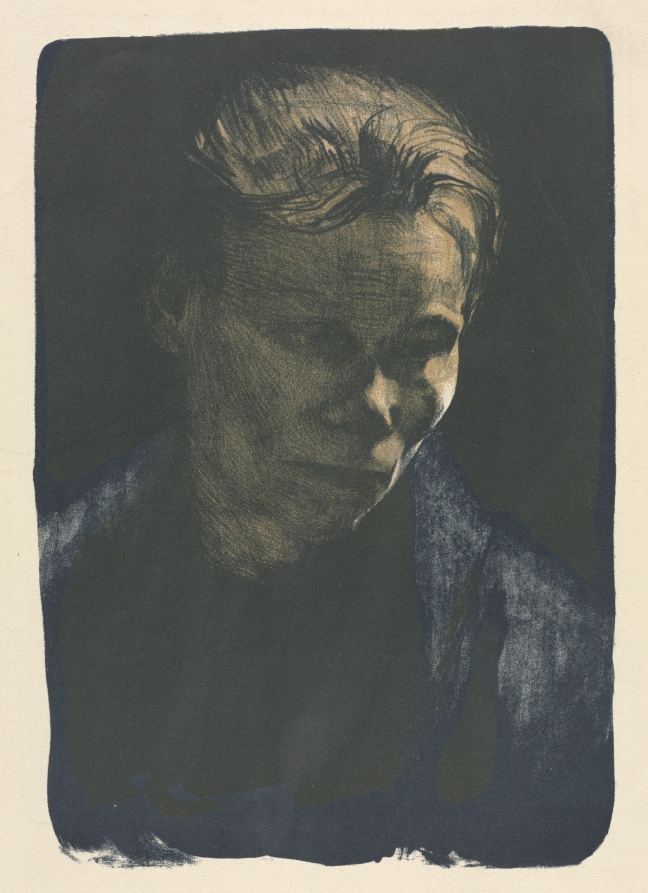
Working Woman with Blue Shawl, 1903. Käthe Kollwitz (1867–1945). Color lithograph. Cleveland Museum of Art; Gift of The Print Club of Cleveland.Working Woman with Blue Shawl, 1903. Käthe Kollwitz (1867–1945). Litografía en color. Cleveland Museum of Art; donación de The Print Club of Cleveland.

The Hypaethral Temple at Philae, Called the Bed of Pharaoh, from Egypt and Nubia, Volume II, 1848, by David Roberts, Louis Haghe, and F. G. Moon, color lithograph after drawing David Roberts, published by Moon, lithographed by Haghe, a temple on the Nile at Philae, Egypt. Temple, a temple, the temple. Temple at Philae; Kiosk of Trajan, Egypt. English, 19th century. Color lithograph. Cleveland Museum of Art, Bequest of John Bonebrake, Cleveland, USA. Source title: Egypt and Nubia, Volume II: The Hypaethral Temple at Philae, called the Bed of Pharaoh, 1848. Hypaethral Temple at Philae; the Bed of Pharaoh; Pharaoh's Bed; Trajan's Kiosk, Philae, Aswan, Egypt. The Hypaethral Temple at Phile, called the Bed of Pharaoh. Also known as Kiosk of Trajan at Philae, Egypt, on the Nile River, Aswan. Lithograph, color lithograph, hand-colored lithograph, tinted lithograph. Print. Prints Department. Nile River, palm trees, boats, figures, mountains, landscape, architecture, ancient Egypt, Roman Egypt, ruins, Orientalism, travel print, 19th-century print, British print, Scottish artist, David Roberts (1796-1864), Louis Haghe (1806-1885), F G Moon (1797-1871), Francis Graham Moon, publisher, lithographer, artist. 19th century, 1848, Victorian era. Egypt and Nubia (1846-1849) series, Volume II. Philae island temple complex, UNESCO World Heritage, moved to Agilkia Island.El templo hipetro de Filé, llamado el Lecho del Faraón, de Egypt and Nubia, volumen II, 1848, de David Roberts, Louis Haghe y F. G. Moon

100th Performance: La Fille du garde-chasse, Ambigu (left part of the poster), 1901Centésima representación: La Fille du garde-chasse, Ambigu (parte izquierda del cartel), 1901

Among Thorns: A Woman Half-Hidden by Autumn LeavesEntre espinas: una mujer semiescondida por hojas otoñales
Written by an AI model (muse-wonder-1.0). Check the references before relying on dates or names.Lo escribió un modelo de IA (muse-wonder-1.0). Revisa las referencias antes de fiarte de fechas o nombres.