RoomsSalas / RoomSala 007
Companion Dogs: Evidence, Expectation and a Small Dog on IcePerros de compañía: evidencia, expectativa y un perrito sobre el hielo
Guardian, hunting and portrait dogs and mischievous protagonists from every era.
Perros guardianes, cazadores, compañeros de retrato y protagonistas traviesos en todas las épocas.
8 pieces8 piezasNovember 2, 2026 – November 23, 20262 de noviembre de 2026 – 23 de noviembre de 2026JSON
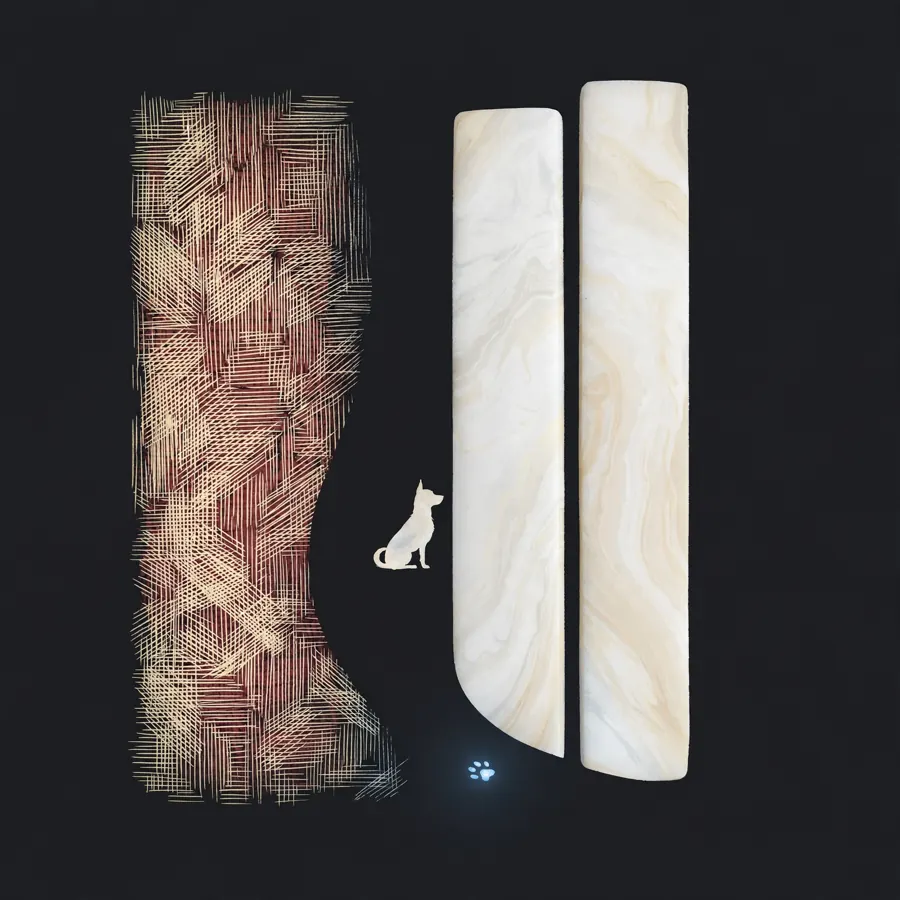
This room does not promise a kennel of masterpieces. It begins with a more uncomfortable observation: in the candidate records, the companion dog is rarely the protagonist. Sometimes it is named only in a tag, sometimes it is a tiny shape on ice, and sometimes it is merely what we expect to find beside a shepherd, a flock or a huntress. The exhibition turns that scarcity into its method. Instead of inventing dogs where the records do not describe them, it asks visitors to distinguish evidence, suggestion and projection. The opening establishes three kinds of expectation. Samuel Palmer's nocturnal etching gathers sheep under the moon, but its description does not name a dog: the guardian exists first in the viewer's habits. Cornacchini's sleeping Endymion is tagged with 'animal companion', while the visible account dwells on marble, nudity and sleep; the label asks to be tested, not obeyed. Carl Milles's Diana, caught mid-movement, summons the hunt without a described hound. Shepherd, sleeper and goddess therefore form a triangle of work, rest and myth in which the animal is desired before it is seen. The middle of the room deliberately includes control pieces: the ragpicker with his sack, a man by a window, a woman reading, a critic in his studio. These are not disguised dog portraits. They show what occupies the place of companionship when no animal is documented —a tool of labour, a book, furniture, the clutter of a working interior. Their presence prevents a sentimental reading in which every nearby object or person becomes a substitute pet. Company, here, is a specific relationship, not a warm atmosphere. That restraint makes the ending possible. In Reinier Nooms's Amsterdam ice scene, a small dog actually runs among skaters, sledges and barrels. It is marginal, quick and easy to miss, closer to the mischievous protagonist of the premise than to a ceremonial portrait accessory. After the long search, its smallness is the point: companion dogs in art often live at ankle height, at the edge of human stories, changing them precisely by not taking them over.
Esta sala no promete una galería de perros célebres. Parte de una observación más incómoda: en las fichas candidatas, el perro de compañía rara vez es protagonista. A veces se nombra solo en una etiqueta, a veces es una mancha diminuta sobre el hielo y a veces es apenas lo que esperamos encontrar junto a un pastor, un rebaño o una cazadora. La exposición convierte esa escasez en método. En lugar de inventar perros donde las fichas no los describen, pide distinguir evidencia, sugerencia y proyección. La apertura plantea tres formas de expectativa. El aguafuerte nocturno de Samuel Palmer reúne ovejas bajo la luna, pero su descripción no nombra un perro: el guardián existe primero en nuestros hábitos de mirada. El Endimión durmiente de Cornacchini lleva en sus etiquetas «animal de compañía», aunque el relato visible se detiene en el mármol, la desnudez y el sueño; la etiqueta debe comprobarse, no obedecerse. La Diana de Carl Milles, suspendida en el movimiento, convoca la caza sin un sabueso descrito. Pastor, durmiente y diosa forman así un triángulo de trabajo, descanso y mito donde el animal se desea antes de verse. La parte central incluye deliberadamente piezas de control: el trapero con su costal, un hombre junto a una ventana, una mujer que lee, un crítico en su estudio. No son retratos caninos disfrazados. Muestran qué ocupa el lugar de la compañía cuando no hay un animal documentado: una herramienta de trabajo, un libro, un mueble, el desorden de un interior activo. Su presencia impide una lectura sentimental en la que cualquier objeto o persona cercana se vuelva mascota sustituta. Aquí, acompañar es una relación concreta, no una atmósfera cálida. Esa contención hace posible el cierre. En la escena de hielo en Ámsterdam de Reinier Nooms, un perrito corre de verdad entre patinadores, trineos y barriles. Es marginal, rápido y fácil de perder, más cercano al protagonista travieso de la premisa que al accesorio ceremonial de un retrato. Después de la larga búsqueda, su pequeñez es el argumento: los perros de compañía en el arte suelen vivir a la altura del tobillo, al borde de las historias humanas, y las cambian justamente al no apoderarse de ellas.
The routeEl recorrido

Christmas (Folding the Last Sheep)Christmas (Folding the Last Sheep) [Navidad (recogiendo a la última oveja)]
Samuel Palmer (British, 1805–1881) · 1850
The route opens at night, with sheep, a shepherd and a rural scene marked by serenity. The record does not describe a dog, so the guardian is first an expectation created by the flock: look for the animal before assuming it is there.
El recorrido abre de noche, con ovejas, pastor y una escena rural de serenidad. La ficha no describe un perro, así que el guardián es primero una expectativa creada por el rebaño: hay que buscar al animal antes de darlo por presente.
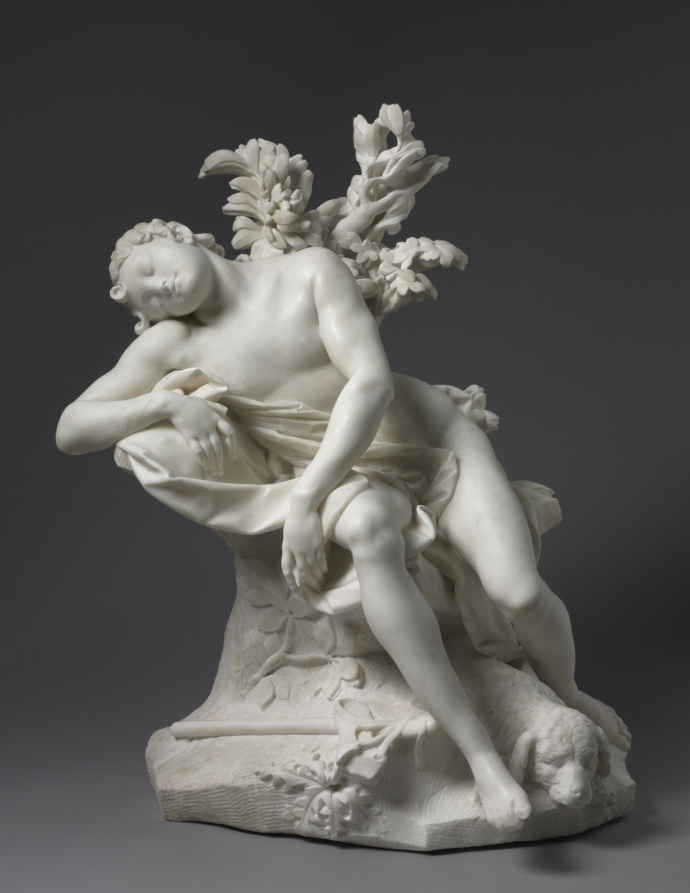
Sleeping EndymionEndimión durmiente
Agostino Cornacchini (Italian, 1686–1754) · 1716
After the watchful shepherd comes absolute rest: the young shepherd sleeps in white marble, with his head on a bundle of cloth. Its tags include 'animal companion', yet the visible description centres on the naked body; compare that label with Palmer's flock and ask what kind of presence survives beside sleep.
Tras el pastor que vigila llega el descanso absoluto: el joven pastor duerme en mármol blanco, con la cabeza sobre un hatillo de tela. Sus etiquetas incluyen «animal de compañía», pero la descripción visible se centra en el cuerpo desnudo; contrasta esa etiqueta con el rebaño de Palmer y pregúntate qué presencia sobrevive junto al sueño.
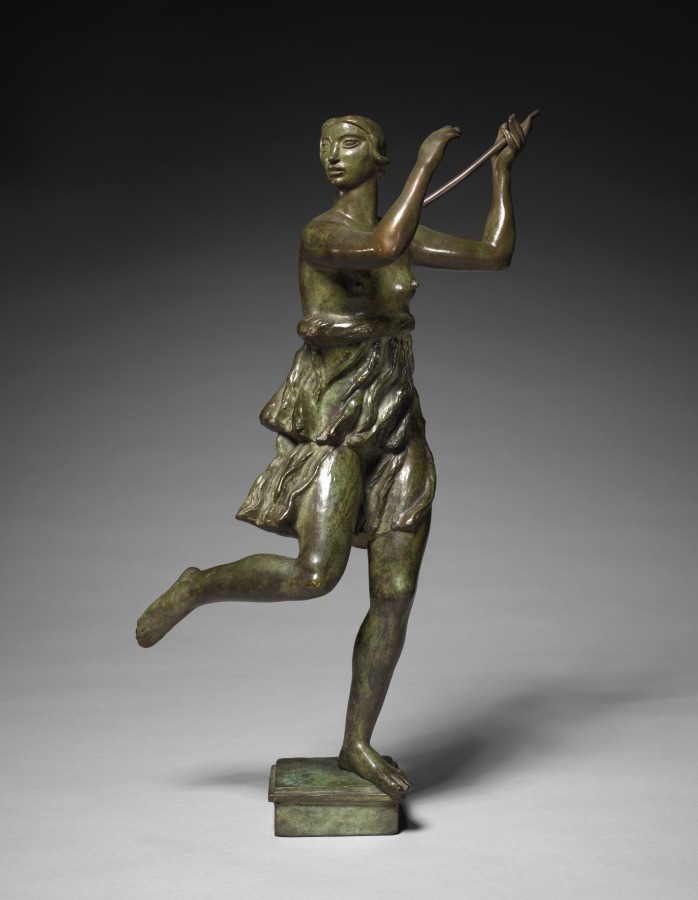
Diana — Carl Milles, 1927–1928Diana — Carl Milles, 1927–1928
Carl Milles (Swedish, 1875–1955) · 1927–1928
Diana introduces the hunt through a slender bronze figure caught in movement, with one foot suspended. No hound is described with her: the huntress, like the shepherd, activates an animal companion that the piece may be withholding from view.
Diana introduce la caza mediante una figura esbelta de bronce en pleno movimiento, con un pie suspendido. No se describe ningún sabueso junto a ella: la cazadora, como el pastor, activa un compañero animal que la pieza quizá está reservando fuera de la vista.

The Rag Picker by Jean-François Raffaëlli (1911)El trapero, de Jean-François Raffaëlli (1911)
Jean-François Raffaëlli (French, 1850–1924) · 1911
The ragpicker changes myth for urban work: an old man stands with his hands in his pockets and a large sack at his feet. That sack occupies the lower place where a viewer's eye seeks a dog, and its weight makes the previous absences feel material rather than symbolic.
El trapero cambia el mito por el trabajo urbano: un hombre mayor está de pie, con las manos en los bolsillos y un gran costal a sus pies. Ese costal ocupa el lugar bajo donde la mirada busca un perro, y su peso vuelve materiales, no simbólicas, las ausencias anteriores.
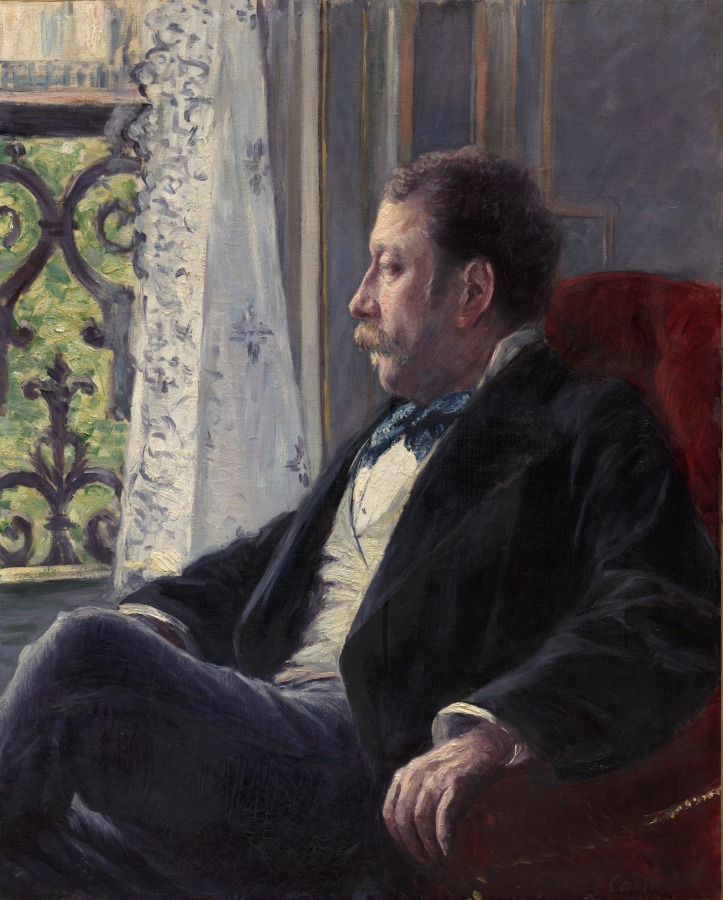
Portrait of a ManRetrato de un hombre
Gustave Caillebotte (French, 1848–1894) · 1880
This male portrait works as a control: a relaxed man, a dark red armchair, a window and no animal mentioned in the record. Placed after the ragpicker, it shows how easily an interior can suggest intimate company without offering an animal body.
Este retrato masculino funciona como control: un hombre relajado, un sillón rojo oscuro, una ventana y ningún animal mencionado en la ficha. Después del trapero, muestra con qué facilidad un interior sugiere compañía íntima sin ofrecer un cuerpo animal.

Reading: Portrait of the Artist's SisterLeyendo: Retrato de la hermana del artista
Henri Fantin-Latour (French, 1836–1904) · 1897
In Reading, company narrows to a young woman absorbed in an open book, her face lit against dark clothing. It does not add a dog; it sharpens the question of what —or who— is allowed to share a person's silence.
En Leyendo, la compañía se reduce a una joven absorbida en un libro abierto, con el rostro iluminado frente a la ropa oscura. No añade un perro; afila la pregunta de qué —o quién— puede compartir el silencio de una persona.

Albert Wolff in His Study, 1881Albert Wolff en su estudio, 1881
Jules Bastien-Lepage (French, 1848–1884) · 1881
Albert Wolff's crowded studio offers another human interior, full of signs of work, collecting and conversation, but with no dog in the provided description. Against Endymion, it separates social company from animal company and prevents the room from using 'companion' as a vague synonym for 'nearby'.
El estudio abarrotado de Albert Wolff ofrece otro interior humano, lleno de señales de trabajo, coleccionismo y conversación, pero sin perro en la descripción disponible. Frente a Endimión, separa la compañía social de la compañía animal e impide usar «compañero» como sinónimo vago de «cercano».

The Blockhouses: Skaters and Sledges on the Ice in AmsterdamLas casas de bloque: patinadores y trineos sobre el hielo en Ámsterdam
Reinier Nooms, called Zeeman (Dutch, c. 1623–1664) · c. 1638–64
The close finally gives the dog a body, but a tiny one: on the Amsterdam ice, among skaters and sledges, a small dog runs beside a seated figure. After so much expectation, that miniature mischief steals the ending — the companion was never the centre, and yet it changes the scale of the whole scene.
El cierre por fin da cuerpo al perro, pero diminuto: sobre el hielo de Ámsterdam, entre patinadores y trineos, un perrito corre junto a una figura sentada. Tras tanta expectativa, esa travesura en miniatura se roba el final: el compañero nunca fue el centro, y sin embargo cambia la escala de toda la escena.
Before you leaveAntes de irte
When a dog is almost invisible, is mentioned only in a tag, or does not appear at all, at what point does companionship stop being an image and become our own projection?
Cuando un perro es casi invisible, se menciona solo en una etiqueta o no aparece, ¿en qué momento la compañía deja de ser imagen y se vuelve proyección nuestra?