Atlas of stylesAtlas de estilos
Gond painting of trees and fauna in dotsPintura gond de árboles y fauna punteada
India central, 1980-actualidadArtistas gond de Madhya Pradesh, IndiaPintura contemporánea indiaRarity 4/5Rareza 4/5JSON
Contemporary Gond painting is the pictorial art of Gond artists from Madhya Pradesh, in central India, developed from 1980 to the present. It turns trees, animals, rivers and oral stories into vibrant surfaces covered in dots, tiny dashes and repeated patterns. It is unmistakable because no form stays flat: fur, leaves and water pulse with dotted texture, outlines are crisp, and nature appears as a living, interconnected network in movement.
La pintura gond contemporánea es el arte pictórico de artistas gond de Madhya Pradesh, en la India central, desarrollado desde 1980 hasta hoy. Convierte árboles, animales, ríos y relatos orales en superficies vibrantes cubiertas de puntos, rayitas y patrones repetidos. Es inconfundible porque ninguna forma queda plana: el pelaje, las hojas y el agua laten con textura punteada, los contornos son nítidos y la naturaleza aparece como una red viva, interconectada y en movimiento.
Visual vocabularyVocabulario visual
The tree of life is the great motif: sinuous trunk, spreading branches, roots visible or merging with water. Around it appear deer, peacocks, birds, fish, turtles, snakes, insects and sometimes human figures in hunting, music or village scenes. Forms are flat, stylized and shown in profile, with large eyes and very clear silhouettes. The interior is never empty: feathers, fur, bark, leaves and scales are built from dots, dashes, wavy lines and repeated scales. Colors are saturated and contrasting — greens, turquoise, ochre, red, orange, black — with dark or colored outlines that separate each figure from a background equally alive with pattern.
El árbol de la vida es el gran motivo: tronco sinuoso, ramas que se abren, raíces visibles o fundidas con el agua. Alrededor aparecen venados, pavos reales, aves, peces, tortugas, serpientes, insectos y a veces figuras humanas en escenas de caza, música o aldea. Las formas son planas, estilizadas y de perfil, con ojos grandes y siluetas muy claras. El interior nunca está vacío: plumas, pelaje, corteza, hojas y escamas se construyen con puntos, rayitas, líneas onduladas y escamas repetidas. Los colores son saturados y contrastantes —verdes, turquesa, ocre, rojo, naranja, negro— con contornos oscuros o de color que separan cada figura de un fondo también vivo y pautado.
CompositionComposición
There is rarely a horizon or Western perspective. The tree usually occupies the center and expands toward the edges, with animals arranged around or inside it in several directions. The composition is dense, without large empty gaps, but remains readable because each creature occupies its own clear silhouette. Scenes feel like maps of a shared habitat: branches, roots, water and ground connect everything, and the eye travels following dots and repetitions.
Casi no hay horizonte ni perspectiva occidental. El árbol suele ocupar el centro y expandirse hacia los bordes, con animales repartidos alrededor o dentro de él en varias direcciones. La composición es densa, sin grandes huecos, pero se lee bien porque cada criatura conserva su silueta clara. Las escenas funcionan como mapas de un hábitat compartido: ramas, raíces, agua y suelo conectan todo, y la mirada se mueve siguiendo puntos y repeticiones.
Texture and techniqueTextura y técnica
It is typically worked in acrylic or gouache, and also ink, on paper or canvas. The artist first draws clean contours and flat color areas, then fills them by hand with dots, short strokes, scales, crosses and fine lines, using brushes or pens. The finish is matte and dense, with small irregularities that reveal the hand. The dot is not decoration added at the end: it builds volume, species and movement.
Se trabaja sobre todo con acrílico o gouache, y también tinta, sobre papel o lienzo. Primero se dibujan contornos limpios y zonas de color plano; después se rellenan a mano con puntos, trazos cortos, escamas, cruces y líneas finas, con pincel o pluma. El acabado es mate y denso, con pequeñas irregularidades que delatan la mano. El punto no es un adorno final: construye volumen, especie y movimiento.
LetteringLetras
Not applicable. It is a primarily pictorial tradition without its own lettering. Any text should use a simple, contemporary typeface set outside the image.
No aplica. Es una tradición principalmente pictórica, sin una rotulación propia. Si lleva texto, debe ir fuera de la imagen, en una tipografía sencilla y contemporánea.
Why almost nobody uses itPor qué casi nadie lo usa
It rarely appears in AI images because models tend to confuse it with Australian Aboriginal dot painting or turn it into generic "tribal art." Its real logic is hard to copy: every dot builds fur, leaves or scales and changes with each animal. Today it offers an alternative to flat minimalism: ecological imagery with intense detail, without perspective or realistic shading, where no species is the sole protagonist.
Casi no aparece en imágenes de IA porque los modelos tienden a confundirla con la pintura de puntos aborigen australiana o a convertirla en un genérico "arte tribal". Su lógica real es difícil de copiar: cada punto construye pelaje, hojas o escamas y cambia según el animal. Hoy aporta una alternativa al minimalismo plano: imágenes ecológicas de detalle intenso, sin perspectiva ni sombreado realista, donde ninguna especie es la única protagonista.
What gives a cheap imitation awayQué delata una imitación barata
- Covering everything with uniform digital dots, like a halftone filter, with no variation in size or density. - Mixing it with generic mandalas, Maori tattoos, Aboriginal Australian art or Aztec patterns as if they were interchangeable. - Animals copied from a stock photo, with realistic shading inside a dotted outline. - Neon gradients, 3D gloss and drop shadows that break the flat, hand-painted feel. - Filling space with invented "tribal" symbols with no relationship to forest, water or animals.
- Cubrir todo con puntos digitales uniformes, como un filtro de semitono, sin variación de tamaño ni densidad. - Mezclarlo con mandalas genéricos, tatuajes maoríes, arte aborigen australiano o patrones aztecas como si fueran lo mismo. - Animales copiados de foto de stock, con sombreado realista dentro de un contorno punteado. - Degradados neón, brillo 3D y sombras proyectadas que rompen lo plano y artesanal. - Llenar el espacio con símbolos "tribales" inventados, sin relación con bosque, agua o animales.
Ideas for todayIdeas para hoy
- 1. Concert poster: a dotted mahua-like tree with birds and deer as the central image, with large modern type set outside the artwork so as not to compete with the pattern.1. Cartel de concierto: un árbol punteado tipo mahua con aves y venados como imagen central, con tipografía moderna y grande fuera de la obra para no competir con el patrón.
- 2. Packaging for tea or spices from India: dotted leaves, fish or peacocks on a matte background, made in paid collaboration with Gond artists and credited on the back.2. Empaque para té o especias de la India: hojas, peces o pavos reales punteados sobre fondo mate, hecho en colaboración pagada con artistas gond y con crédito en el reverso.
- 3. Exploration video game: a forest level where ground, water and animal fur share dotted patterns, and each species is recognized by its own rhythm of dots and dashes.3. Videojuego de exploración: un nivel de bosque donde suelo, agua y pelaje comparten patrones de puntos, y cada especie se reconoce por su propio ritmo de puntos y rayitas.
Use with respect: Úsalo con respeto: El pueblo gond es una comunidad indígena adivasi viva de la India central, y su pintura está ligada a sus relatos orales, su relación con el bosque y sus creencias. Úsala como inspiración estructural —el punto, la interconexión de especies—, no copies motivos sagrados o narrativas concretas de obras identificables, acredita siempre la tradición y, en proyectos comerciales, colabora y paga a artistas gond.
Related pieces in the museumPiezas relacionadas en el museo
Matched by shared themes and motifs — related, not necessarily in this exact style.
Encontradas por temas y motivos en común: relacionadas, no necesariamente en este estilo exacto.

Fragment from a funeral garment or pall, in the style of the Buyid periodFragmento de una prenda funeraria o paño mortuorio, en estilo del periodo buyí
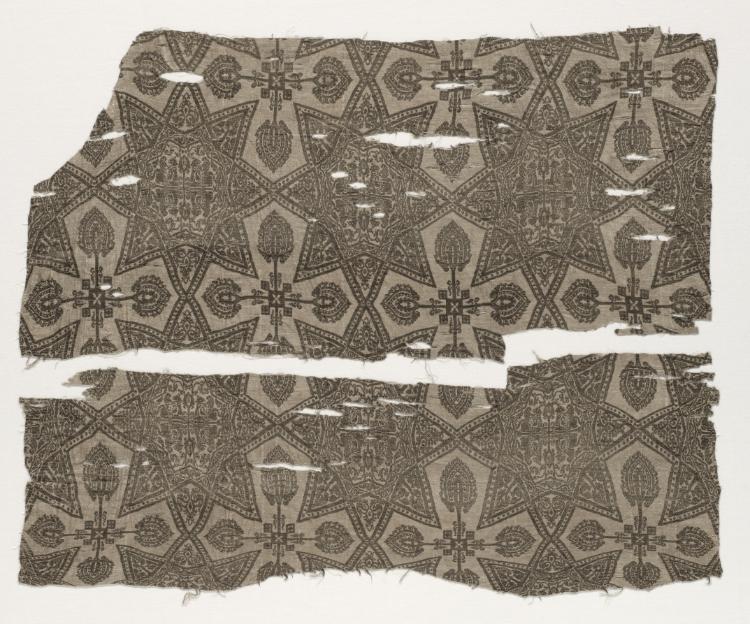
Fragments with Eight-Pointed Star (Two Pieces)Fragmentos con estrella de ocho puntas (dos piezas)
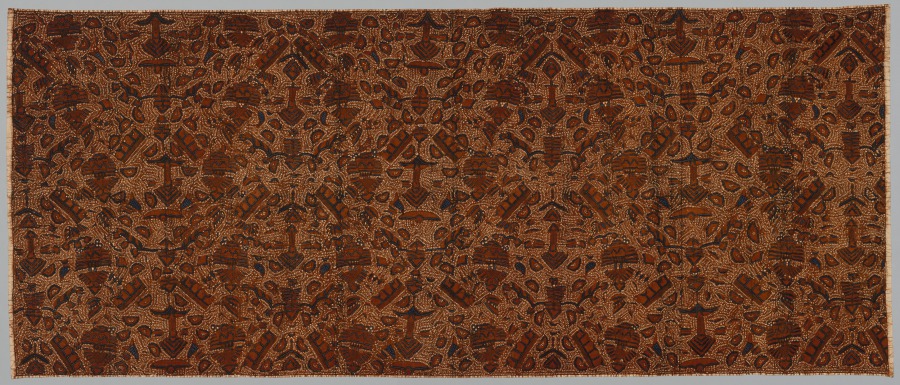
Waist Cloth (Kain Panjang) – Central Javanese BatikTela de cintura (Kain Panjang) – Batik del centro de Java
Written by an AI model (muse-wonder-1.0). Check the references before relying on dates or names.Lo escribió un modelo de IA (muse-wonder-1.0). Revisa las referencias antes de fiarte de fechas o nombres.