Atlas of stylesAtlas de estilos
Japanese export tea label on washi paperEtiqueta japonesa de té de exportación en papel washi
Japón para exportación a EE. UU. y Europa, 1870-1920Japón, comercio de exportacióngrafica-comercial-vernaculaRarity 5/5Rareza 5/5JSON
Etiqueta japonesa de té de exportación en papel washi es la gráfica comercial que cubría cajas de té japonés enviadas a Estados Unidos y Europa entre 1870 y 1920. Nació en los puertos y talleres litográficos japoneses tras la apertura comercial del periodo Meiji. Es inconfundible por combinar una escena colorida, casi de estampa, con información comercial en inglés, marcos ornamentales densos y el papel fibroso visible. No es publicidad minimalista: es etiqueta, paisaje, marca y certificado de origen en una sola hoja que debía vender exotismo y confianza a distancia.
Japanese export tea label on washi paper is the commercial graphic that covered crates of Japanese tea shipped to the United States and Europe between 1870 and 1920. It was born in Japanese ports and lithographic workshops after the commercial opening of the Meiji period. It is unmistakable for combining a colorful, print-like scene with commercial information in English, dense ornamental frames, and visible fibrous paper. It is not minimalist advertising: it is label, landscape, brand, and certificate of origin on a single sheet that had to sell exoticism and trust from afar.
Visual vocabularyVocabulario visual
Formas rectangulares de etiqueta y caja, con pabellones, abanicos, medallones y cartelas que encierran texto. Motivos recurrentes: Monte Fuji, campos y cestas de té, mujeres con kimono recolectando hojas, pinos, grullas, crisantemos, olas, barcos de vapor y puertos. La línea combina contorno fino de grabado con pinceladas planas de color. Predominan bermellón, índigo, verde té, ocre dorado, rosa pálido y negro tinta sobre washi crema. El ornamento es denso pero ordenado: cenefas geométricas, flores repetidas, sellos rojos y pequeños caracteres japoneses junto a letras latinas comerciales.
Rectangular label and crate shapes, with pavilions, fans, medallions, and cartouches enclosing text. Recurring motifs: Mount Fuji, tea fields and baskets, women in kimono picking leaves, pines, cranes, chrysanthemums, waves, steamships, and ports. The line combines fine engraved contour with flat brushstrokes of color. Vermilion, indigo, tea green, golden ochre, pale pink, and ink black predominate on cream washi. The ornament is dense but orderly: geometric borders, repeated flowers, red seals, and small Japanese characters beside commercial Latin letters.
CompositionComposición
It is composed frontally, like a small, symmetrical poster. At the center sits the main scene inside a frame; above it, the trade name in an arch or band; below, origin, grade, and port of shipment. The sides accumulate medallions, seals, and secondary motifs without leaving large empty gaps. Everything reads in layers: first the exotic image, then the brand, finally the practical buying information.
It is composed frontally, like a small, symmetrical poster. At the center sits the main scene inside a frame; above it, the trade name in an arch or band; below, origin, grade, and port of shipment. The sides accumulate medallions, seals, and secondary motifs without leaving large empty gaps. Everything reads in layers: first the exotic image, then the brand, finally the practical buying information.
Texture and techniqueTextura y técnica
Técnica mixta según taller y fecha: litografía en color, impresión con bloques de madera y retoques, sobre washi o papel japonés delgado de fibras largas. La tinta se asienta irregular, deja bordes ligeramente desenfocados y colores planos con pequeñas variaciones. Se ven grano, fibras, pliegues, manchas de humedad, desgaste en esquinas y el pegado sobre madera de la caja de té.
Mixed technique depending on workshop and date: color lithography, woodblock printing, and retouching, on washi or thin Japanese paper with long fibers. The ink settles unevenly, leaving slightly soft edges and flat colors with small variations. You can see grain, fibers, creases, damp stains, worn corners, and the pasting onto the wood of the tea crate.
LetteringLetras
Letras latinas comerciales en mayúsculas con serifas, a veces arqueadas, sombreadas o con filetes, para el nombre, "Japan Tea", calidad y puerto. Se combinan con caracteres japoneses breves, a menudo en vertical o dentro de un sello rojo. La jerarquía es clara: marca grande, reclamos medianos, datos pequeños.
Commercial Latin capitals with serifs, sometimes arched, shaded, or outlined, for the name, "Japan Tea," grade, and port. They combine with brief Japanese characters, often vertical or inside a red seal. The hierarchy is clear: large brand, medium claims, small details.
Why almost nobody uses itPor qué casi nadie lo usa
Casi no aparece porque los modelos la confunden con ukiyo-e, arte japonés genérico o chinoiserie, y porque exige resolver a la vez imagen, marco, papel y texto bilingüe legible. Es efímera comercial, no pintura de museo, así que está menos representada. Hoy aporta lo contrario al empaque limpio: procedencia visible, oficio impreso, densidad informativa y una exotización histórica que conviene reinterpretar, no copiar acríticamente.
It rarely appears because models confuse it with ukiyo-e, generic Japanese art, or chinoiserie, and because it requires solving image, frame, paper, and legible bilingual text all at once. It is commercial ephemera, not museum painting, so it is less represented. Today it offers the opposite of clean packaging: visible provenance, printed craft, information density, and a historical exoticization that should be reinterpreted, not copied uncritically.
What gives a cheap imitation awayQué delata una imitación barata
Usar kanji inventados o ilegibles como decoración, convertirla en ukiyo-e puro sin texto comercial, hacerla minimalista y con mucho aire, aplicar degradados digitales, brillos 3D o neón, poner tipografía moderna de palo seco, confundirla con chinoiserie francesa o con una postal turística actual, e inventar marcas históricas reales.
Using invented or illegible kanji as decoration, turning it into pure ukiyo-e with no commercial text, making it minimalist with lots of empty space, applying digital gradients, 3D gloss or neon, using modern sans-serif type, confusing it with French chinoiserie or a present-day tourist postcard, and inventing real historical brand names.
Ideas for todayIdeas para hoy
- Cartel para un festival de té o una cata: escena central de cosecha, marco denso y datos reales del evento abajo.Poster for a tea festival or tasting: central harvest scene, dense frame, and the event's real details at the bottom.
- Marca de tés e infusiones contemporáneas: una etiqueta frontal por variedad, cambiando paisaje, color dominante y sello, con información legal legible al reverso.Brand for contemporary teas and infusions: one frontal label per variety, changing the landscape, dominant color and seal, with legible legal information on the back.
- Videojuego de comercio y viajes: etiquetas coleccionables para cajas de cargamento en un puerto del siglo XIX, que indiquen origen, calidad y destino del té.Trade-and-travel video game: collectible labels for cargo crates in a 19th-century port, indicating the tea's origin, grade, and destination.
Use with respect: Úsalo con respeto: No es un motivo sagrado, pero sí gráfica japonesa hecha para mirada extranjera. Úsala con respeto: no uses caracteres japoneses falsos o sin sentido, evita disfraces y estereotipos cómicos, y si empleas texto en japonés, verifica que sea real y pertinente. / It is not a sacred motif, but it is Japanese graphics made for foreign eyes. Use it respectfully: do not use fake or meaningless Japanese characters, avoid costumes and comic stereotypes, and if you use Japanese text, verify that it is real and relevant.
Related pieces in the museumPiezas relacionadas en el museo
Matched by shared themes and motifs — related, not necessarily in this exact style.
Encontradas por temas y motivos en común: relacionadas, no necesariamente en este estilo exacto.

Mount Fuji, Honshu, Japan, from OrbitEl monte Fuji, Honshu, Japón, desde la órbita

Minamoto no Yoritomo's Hunt on the Slopes of Mount FujiCacería de Minamoto no Yoritomo en las faldas del monte Fuji
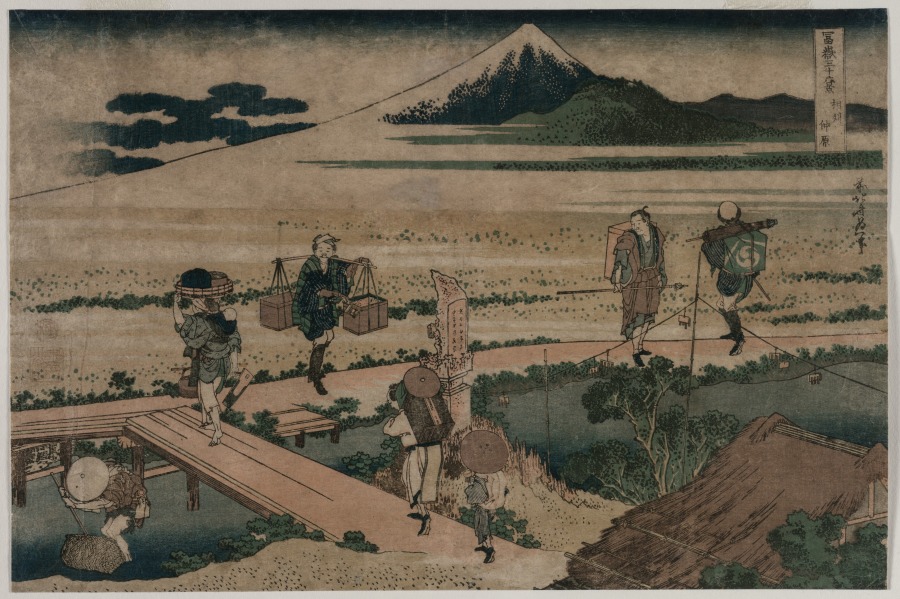
Nakahara in Sagami Province, from Thirty-six Views of Mount FujiNakahara en la provincia de Sagami, de Treinta y seis vistas del monte Fuji

The Round Passion: Christ Carrying the Cross, 1509La Pasión Redonda: Cristo cargando la cruz, 1509
Written by an AI model (muse-wonder-1.0). Check the references before relying on dates or names.Lo escribió un modelo de IA (muse-wonder-1.0). Revisa las referencias antes de fiarte de fechas o nombres.