Atlas of stylesAtlas de estilos
British Vorticist angular machine formsVorticismo británico de formas angulares mecánicas
1913–1925Reino UnidoMovimientos artísticosRarity 5/5Rareza 5/5JSON
Vorticism was the British response, between 1913 and 1925, to Cubism and Futurism, driven in London by Wyndham Lewis and the circle around the magazine BLAST. In the middle of the industrial era and on the eve of the First World War, it turned the city, the machine and the body into concentrated energy: a vortex. It is unmistakable for its hard diagonals, planes intersecting like blades and figures reduced to tense mechanisms, without Futurism's celebration of speed.
El vorticismo fue la respuesta británica, entre 1913 y 1925, al cubismo y al futurismo, impulsada en Londres por Wyndham Lewis y el círculo de la revista BLAST. En plena era industrial y en vísperas de la Primera Guerra Mundial, convirtió la ciudad, la máquina y el cuerpo en energía concentrada: un vórtice. Es inconfundible por sus diagonales duras, planos que se interceptan como cuchillas y figuras reducidas a mecanismos tensos, sin la celebración futurista de la velocidad.
Visual vocabularyVocabulario visual
Wedges, blades, cones, cylinders and broken arcs replace natural curves. Cranes, bridges, ships, propellers, stairs, ports and factory structures are cut into interlocking planes. The human body becomes an automaton: angular heads, tube-like limbs, joints like hinges. The line is straight, diagonal and cutting, rarely wavy. Color is restricted and earthy or industrial: black, dirty white, ochre, rust red, grays and dull blue, applied in flat blocks. There is almost no ornament; pattern only appears as dazzle camouflage, stripes and grids that break up volume.
Cuñas, cuchillas, conos, cilindros y arcos quebrados sustituyen a la curva natural. Grúas, puentes, barcos, hélices, escaleras, puertos y estructuras fabriles se recortan en planos que se encajan. El cuerpo humano se vuelve autómata: cabezas angulosas, miembros como tubos, articulaciones como bisagras. La línea es recta, diagonal y cortante, rara vez ondulada. El color es restringido, terroso o industrial: negro, blanco sucio, ocre, rojo óxido, grises y azul apagado, en bloques planos. Casi no hay ornamento; el patrón solo aparece como camuflaje dazzle, franjas y retículas que rompen el volumen.
CompositionComposición
Everything is organized around a vortex: a tilted center, often off-axis, from which wedges, arcs and diagonals radiate and collide. There are no calm horizons or symmetrical fronts; the scene is cropped abruptly, as if seen from above or through machinery. Figures and buildings overlap in layers, compressed against the edges. The visual energy moves inward and outward at the same time, creating tension rather than narrative. Empty space is scarce and always angular.
Todo se organiza alrededor de un vórtice: un centro inclinado, a menudo descentrado, desde el que irradian y chocan cuñas, arcos y diagonales. No hay horizontes tranquilos ni frentes simétricos; la escena se recorta de golpe, como vista desde arriba o a través de una máquina. Figuras y edificios se superponen en capas, comprimidos contra los bordes. La energía visual entra y sale al mismo tiempo, creando tensión más que relato. El espacio vacío es escaso y siempre anguloso.
Texture and techniqueTextura y técnica
It was mainly oil on canvas, drawing, printmaking and woodcut, with matte surfaces, visible edges and flat areas of color cut against each other. Black lines do not outline softly: they slash and lock forms together. In prints the grain and harsh contrast reinforce the mechanical feel. Sculpture used direct carving and sharp volumes. The finish looks dry and constructed, never polished or atmospheric.
Se trabajó sobre todo en óleo sobre lienzo, dibujo, grabado y xilografía, con superficies mates, bordes visibles y zonas planas de color recortadas unas contra otras. La línea negra no contornea con suavidad: corta y traba las formas. En el grabado, la veta y el contraste duro refuerzan lo mecánico. La escultura buscó la talla directa y volúmenes afilados. El acabado se ve seco y construido, nunca pulido ni atmosférico.
LetteringLetras
粗 and aggressive typography in the magazine BLAST: large sans-serif capitals, uneven blocks, slanted lines and manifestos that occupy the page like posters. Letters function as visual impact, not as orderly reading.
Tipografía gruesa y agresiva en la revista BLAST: mayúsculas sans serif enormes, bloques desiguales, líneas inclinadas y manifiestos que ocupan la página como un cartel. La letra funciona como golpe visual, no como lectura ordenada.
Why almost nobody uses itPor qué casi nadie lo usa
It was a brief, mostly British movement, cut short by the First World War, with few canonical images compared with Cubism or Futurism, so AI models confuse it with both. Today it offers an alternative language for technology: mechanical and urban, but dry, critical and tense, without retro steampunk nostalgia or glossy futurism.
Fue un movimiento breve, sobre todo británico, interrumpido por la Primera Guerra Mundial, con pocas imágenes canónicas frente al cubismo o el futurismo, así que los modelos de IA lo confunden con ambos. Hoy aporta un lenguaje distinto para hablar de tecnología: mecánico y urbano, pero seco, crítico y tenso, sin nostalgia retro steampunk ni futurismo brillante.
What gives a cheap imitation awayQué delata una imitación barata
Using only lightning bolts or generic triangles; making it smooth, neon and futuristic like science fiction; adding steampunk gears and pistons as literal decoration; copying Italian Futurism with speed lines and repeated motion; using soft gradients, rounded corners and perfect symmetry; turning camouflage dazzle painting into colorful confetti.
Usar solo rayos o triángulos genéricos; hacerlo liso, neón y futurista como ciencia ficción; añadir engranes y pistones steampunk como decoración literal; copiar el futurismo italiano con líneas de velocidad y repetición del movimiento; usar degradados suaves, esquinas redondeadas y simetría perfecta; convertir el camuflaje dazzle en confeti de colores.
Ideas for todayIdeas para hoy
- Poster for an electronic music or industrial design festival: a crowd reduced to wedges moving toward a black vortex.Cartel para un festival de música electrónica o diseño industrial: una multitud reducida a cuñas que avanza hacia un vórtice negro.
- Identity for an urban mobility or robotics brand: a mark built from interlocking blades, without literal wheels or circuits.Identidad para una marca de movilidad urbana o robótica: un logotipo construido con cuchillas entrelazadas, sin ruedas ni circuitos literales.
- Puzzle or strategy video game set in a port: dazzle-painted ships, cranes and docks as angular, readable levels.Videojuego de puzles o estrategia en un puerto: barcos con pintura dazzle, grúas y muelles como niveles angulosos y legibles.
Related pieces in the museumPiezas relacionadas en el museo
Matched by shared themes and motifs — related, not necessarily in this exact style.
Encontradas por temas y motivos en común: relacionadas, no necesariamente en este estilo exacto.

The Small Passion: The Betrayal of Christ, by Albrecht Dürer, c. 1509-10. Woodcut, Cleveland Museum of Art.La pequeña Pasión: la traición de Cristo, de Albrecht Dürer, hacia 1509-10. Xilografía, Cleveland Museum of Art.
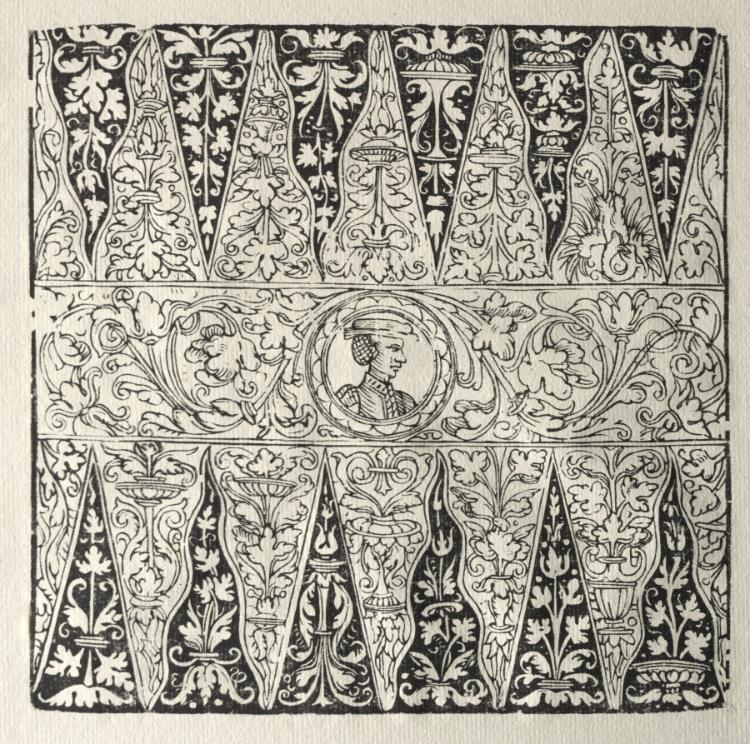
Puffspiel — a Renaissance game board in woodcutPuffspiel, un tablero renacentista en xilografía
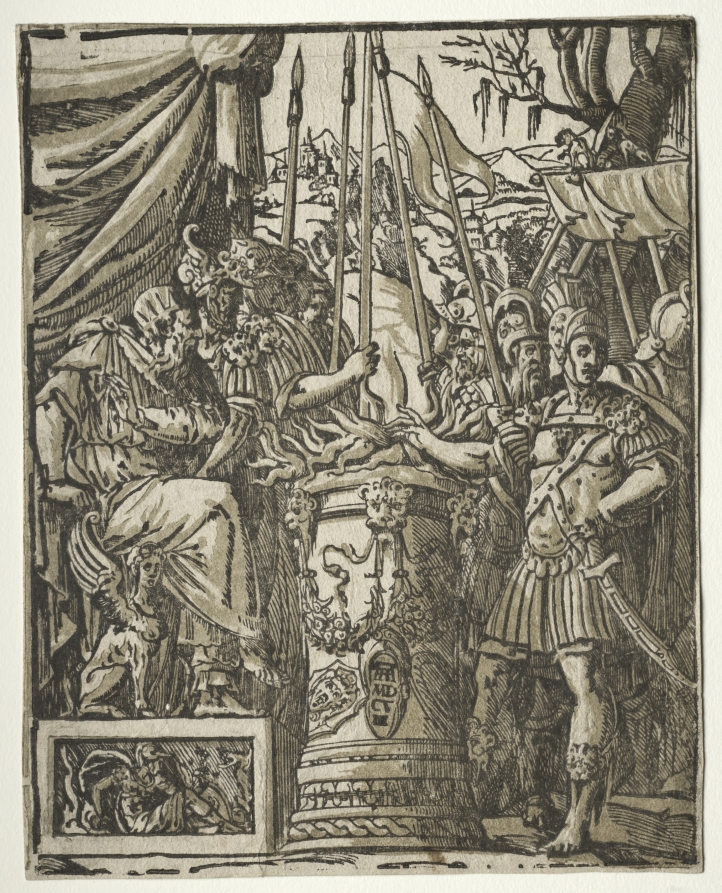
Mucius Scaevola Before the Fire, Chiaroscuro WoodcutMucio Escévola ante el fuego, grabado en claroscuro

Matthew from Christ, the Apostles, and Saint Paul, attributed after Lucas Cranach the Elder, 1563/64Mateo, de Cristo, los apóstoles y san Pablo, según Lucas Cranach el Viejo, 1563/64

London Types: Beef-eater — William Nicholson, 1898Tipos de Londres: Beefeater — William Nicholson, 1898
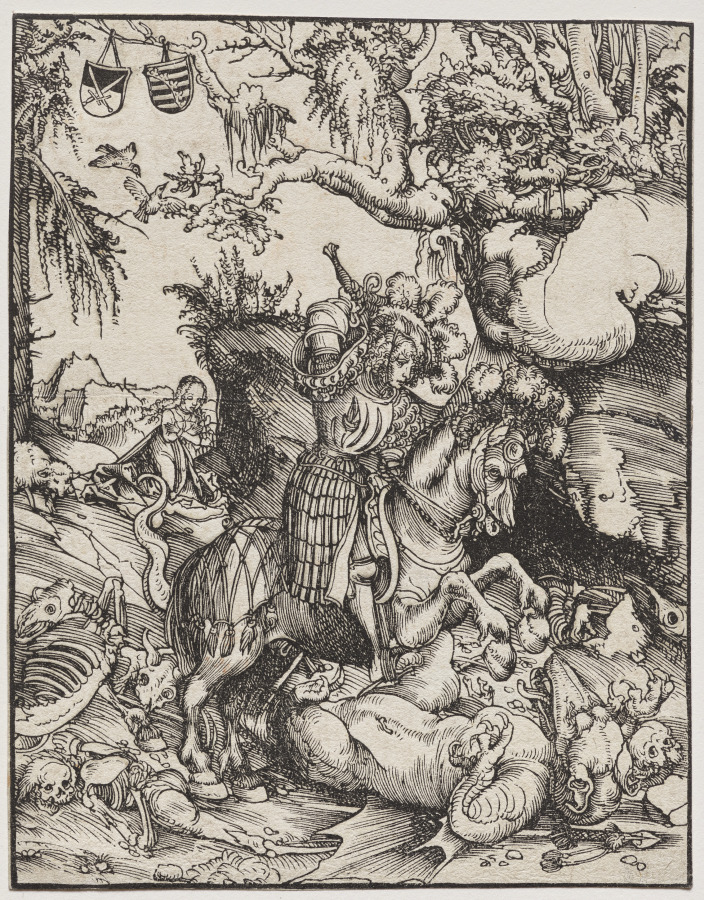
Saint George Slaying the Dragon — Lucas Cranach, c. 1510–1515San Jorge matando al dragón — Lucas Cranach, h. 1510–1515

Etude à Quatre Mains (Study for Four Hands), by Auguste Louis Lepère (1890)Estudio a cuatro manos, de Auguste Louis Lepère (1890)
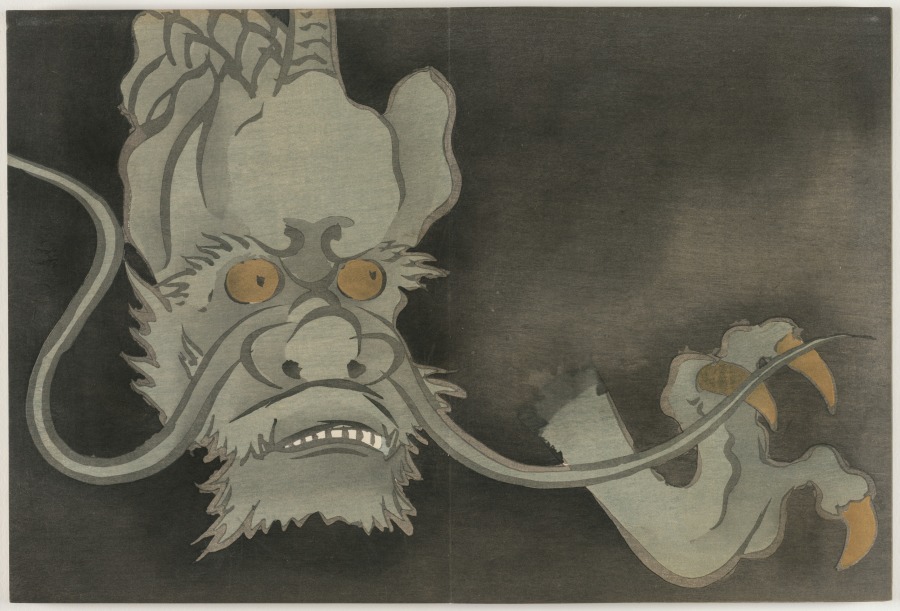
Dragon (Ryū), from Flowers of a Hundred Worlds (Momoyogusa)Dragón (Ryū), de Flores de cien mundos (Momoyogusa)
Written by an AI model (muse-wonder-1.0). Check the references before relying on dates or names.Lo escribió un modelo de IA (muse-wonder-1.0). Revisa las referencias antes de fiarte de fechas o nombres.