Atlas of stylesAtlas de estilos
Sumba Ikat Loom Weaving (Secular Floral)Tejido ikat de telar de Sumba floral laico
tradicionalIndonesiaartesania-textilRarity 5/5Rareza 5/5JSON
Sumba ikat loom weaving, from the island of Sumba in eastern Indonesia, in its secular floral version: traditional handwoven cloth where the pattern is created by dyeing the threads before weaving. Unlike ceremonial pieces with ancestors and totemic animals, here everyday flowers, leaves and vines dominate. It is unmistakable for its vibrating, slightly blurred outlines, mirror symmetry, horizontal bands, and the contrast between deep indigo, earthy red and undyed cotton.
Tejido ikat de telar de Sumba, isla del este de Indonesia, en su variante floral y laica: paños tradicionales hechos a mano donde el dibujo nace al teñir los hilos antes de tejer. Frente a las piezas ceremoniales con ancestros y animales totémicos, aquí dominan flores, hojas y enredaderas de uso cotidiano. Es inconfundible por sus contornos vibrantes y ligeramente borrosos, su simetría en espejo, sus franjas horizontales y el contraste entre índigo profundo, rojo terroso y algodón crudo.
Visual vocabularyVocabulario visual
Stylized flowers in profile or front view, curling tendrils, paired leaves, small buds, dots and diamond fillers between stems. Motifs are flat, outlined by the dye itself rather than by a drawn black line. The line is stepped and feathery where dyed and undyed warp threads meet. Color rests on deep indigo, morinda brick red, warm brown, blackish blue and creamy undyed cotton. Ornament is dense but ordered: repeated plant rhythms, narrow guard stripes and fine pinstripes framing larger floral bands, with no shading, volume or photographic detail.
Flores estilizadas de perfil o de frente, zarcillos enroscados, hojas en pares, botones pequeños, puntos y rombos de relleno entre tallos. Los motivos son planos y están delimitados por el propio tinte, no por una línea negra dibujada. La línea es escalonada y plumosa donde se encuentran los hilos teñidos y sin teñir. El color se apoya en índigo profundo, rojo ladrillo de morinda, café cálido, azul casi negro y algodón crudo sin teñir. El ornamento es denso pero ordenado: ritmos vegetales repetidos, franjas protectoras angostas y filetes finos que enmarcan las bandas florales grandes, sin sombreado, volumen ni detalle fotográfico.
CompositionComposición
The cloth is organized in horizontal bands across a long rectangular field. A wide central band carries the main floral repeat, flanked by narrower stripes and small border motifs. Designs are mirrored along the vertical axis, so vines and flowers open symmetrically from the center. The ends are usually plainer or fringed. Repetition is regular but never mechanical: each repeat shifts slightly, preserving the rhythm of a hand-planned warp.
El paño se organiza en franjas horizontales sobre un campo rectangular y alargado. Una banda central ancha lleva el motivo floral principal, flanqueada por franjas angostas y pequeños motivos de borde. Los dibujos se reflejan en espejo sobre el eje vertical, de modo que enredaderas y flores se abren simétricamente desde el centro. Los extremos suelen ser más lisos o con flecos. La repetición es regular pero nunca mecánica: cada módulo se desplaza un poco y conserva el ritmo de una urdimbre planeada a mano.
Texture and techniqueTextura y técnica
It is warp ikat: bundles of cotton warp threads are tightly bound, resist-dyed, unbound and re-bound for successive colors, then set on a loom and woven with a plain weft. Indigo blues and morinda reds come from natural dye traditions. The image therefore lives inside the threads, producing feathered edges, slight misalignments and a flat, matte, slightly coarse cotton surface with no embroidery or surface print.
Es ikat de urdimbre: manojos de hilos de algodón de la urdimbre se atan con firmeza, se tiñen por reserva, se desatan y se vuelven a atar para los siguientes colores; luego se montan en el telar y se tejen con una trama sencilla. Los azules de índigo y los rojos de morinda provienen de tradiciones de tinte natural. Por eso la imagen vive dentro de los hilos y produce bordes plumosos, leves desajustes y una superficie de algodón plana, mate y algo áspera, sin bordado ni estampado superficial.
LetteringLetras
Not applicable. Traditional cloth carries no lettering. For contemporary uses, pair it with a clean, quiet sans-serif set outside the woven field, never simulated as if woven into the ikat.
No aplica. El paño tradicional no lleva letras. Para usos actuales, acompáñalo con una sans-serif limpia y discreta colocada fuera del campo tejido, nunca simulada como si estuviera tejida en el ikat.
Why almost nobody uses itPor qué casi nadie lo usa
Image models know 'ikat' mainly as a generic blurred ethnic pattern and often mix it with batik, Aztec geometry or Balinese prints. Sumba cloth also requires planning the picture in the warp before weaving, a logic opposite to surface printing, so generators make motifs too clean and symmetrical like vectors. Its quiet plant vocabulary, limited natural palette and long horizontal format are less common in training images than bold figurative textiles, yet today it offers a warm, handmade alternative to flat digital ornament.
Los modelos de imagen conocen el «ikat» sobre todo como un patrón étnico borroso genérico y suelen mezclarlo con batik, geometría azteca o estampados balineses. Además, el paño de Sumba exige planear el dibujo en la urdimbre antes de tejer, una lógica opuesta a la impresión superficial, así que los generadores hacen motivos demasiado limpios y simétricos, como vectores. Su vocabulario vegetal discreto, su paleta natural limitada y su formato horizontal alargado aparecen menos en las imágenes de entrenamiento que los textiles figurativos llamativos; hoy aporta una alternativa cálida y artesanal al ornamento digital plano.
What gives a cheap imitation awayQué delata una imitación barata
- Perfectly sharp, vector-like flowers printed on smooth fabric. - Using ancestral figures, skull trees, horses or ceremonial scenes and calling it 'secular floral'. - Neon, pastel or rainbow palettes instead of natural indigo and earth red. - Random boho or Aztec-style geometry with no bands or mirror symmetry. - Glossy satin, embroidery or photographic shading instead of a flat woven surface.
- Flores perfectas y nítidas, tipo vector, impresas sobre tela lisa. - Usar figuras ancestrales, árboles de calaveras, caballos o escenas ceremoniales y llamarlo «floral laico». - Paletas neón, pastel o arcoíris en vez de índigo natural y rojo terroso. - Geometría aleatoria estilo boho o azteca, sin franjas ni simetría en espejo. - Satín brillante, bordado o sombreado fotográfico en vez de una superficie tejida y plana.
Ideas for todayIdeas para hoy
- 1. Poster: a festival poster with a central symmetrical flowering vine on deep indigo, wide cream margins and a single red band carrying the title outside the cloth area.1. Cartel: un cartel de festival con una enredadera floral simétrica al centro sobre índigo profundo, márgenes amplios color crudo y una sola franja roja con el título fuera del área tejida.
- 2. Brand: packaging for coffee, tea or natural soap using one woven floral band as a wrap, printed matte on unbleached paper and credited to Sumba inspiration.2. Marca: empaque para café, té o jabón natural con una banda floral tejida como cintillo, impreso mate sobre papel sin blanquear y con crédito a la inspiración de Sumba.
- 3. Video game: loom-woven banners, market awnings and travel cloaks for an island village, with visibly feathered motifs and fringed ends, avoiding sacred designs.3. Videojuego: estandartes de telar, toldos de mercado y capas de viaje para una aldea isleña, con motivos visiblemente difuminados en el borde y extremos con flecos, sin usar diseños sagrados.
Use with respect: Úsalo con respeto: Es una tradición viva de las comunidades tejedoras de Sumba. Usa solo la vertiente floral laica, evita copiar motivos ancestrales, ceremoniales o funerarios y no los presentes como decoración genérica. Para producción comercial, consulta y retribuye a artesanas y artesanos locales, y nombra el origen con precisión. / It is a living tradition of Sumbanese weaving communities. Use only the secular floral vein, avoid copying ancestral, ceremonial or funerary motifs, and do not present them as generic decoration. For commercial production, consult and compensate local artisans, and name the origin accurately.
Related pieces in the museumPiezas relacionadas en el museo
Matched by shared themes and motifs — related, not necessarily in this exact style.
Encontradas por temas y motivos en común: relacionadas, no necesariamente en este estilo exacto.

Loose Textile Fragments. North Coast of Peru, Moche CultureFragmentos textiles sueltos. Costa norte del Perú, cultura Moche
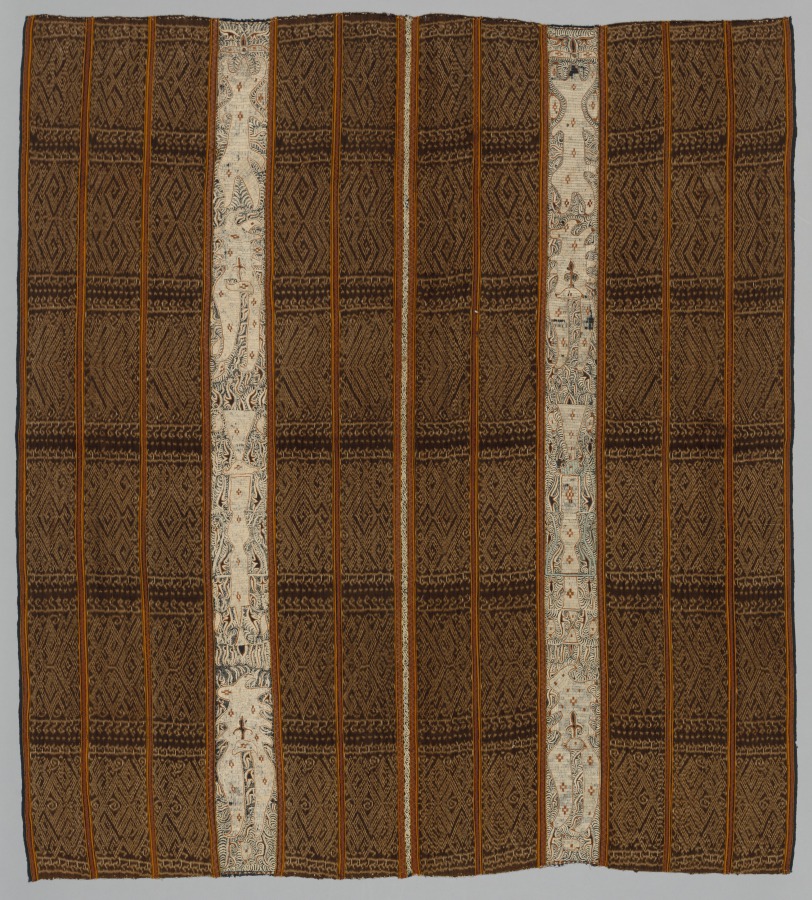
Tapis: Ceremonial Sarong from Lampung, Sumatra (19th century)Tapis: sarong ceremonial de Lampung, Sumatra (siglo XIX)

Textile Fragment with Batik Print, 8th CenturyFragmento textil con estampado batik, siglo VIII
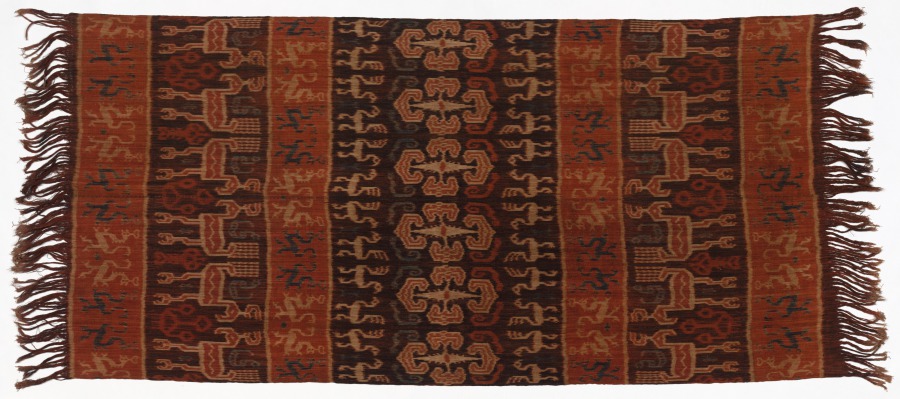
Hinggi - Ceremonial Mantle from SumbaHinggi - Manto ceremonial de Sumba
Written by an AI model (muse-wonder-1.0). Check the references before relying on dates or names.Lo escribió un modelo de IA (muse-wonder-1.0). Revisa las referencias antes de fiarte de fechas o nombres.