RoomsSalas / RoomSala 008
The Marvellous LaboratoryEl laboratorio maravilloso
Microscopes, telescopes, test tubes and scientific images that look like abstract artworks.
Microscopios, telescopios, probetas e imágenes científicas que parecen obras de arte abstracto.
12 pieces12 piezasNovember 2, 2026 – November 23, 20262 de noviembre de 2026 – 23 de noviembre de 2026JSON
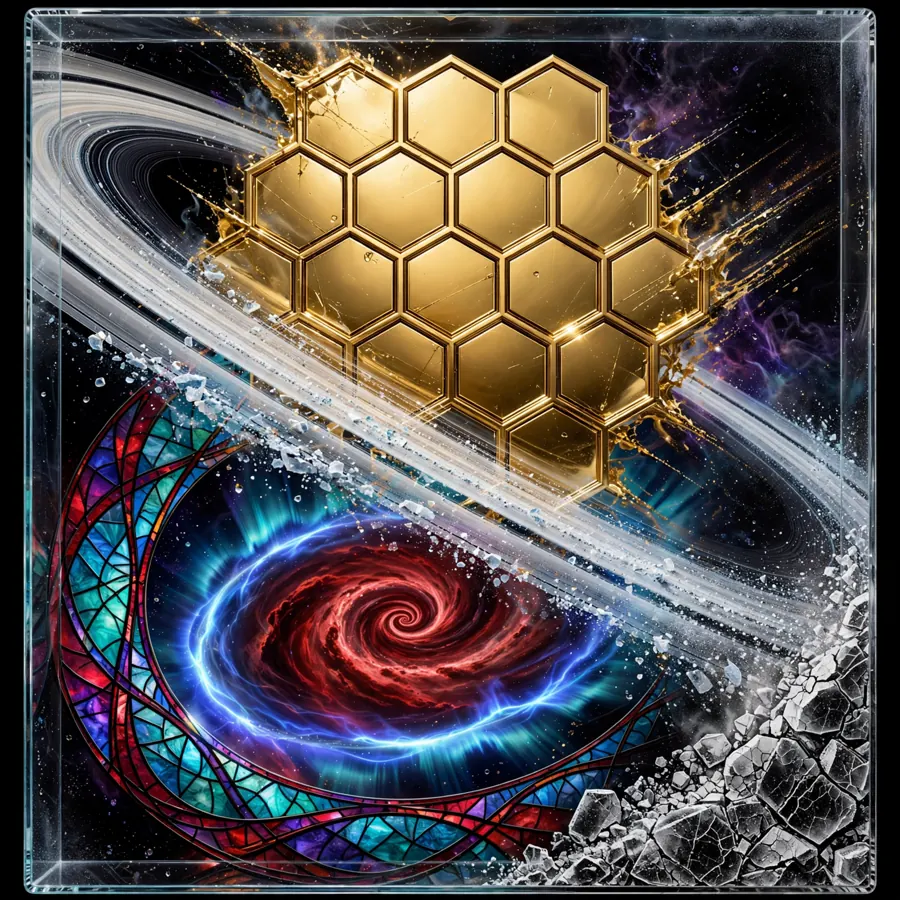
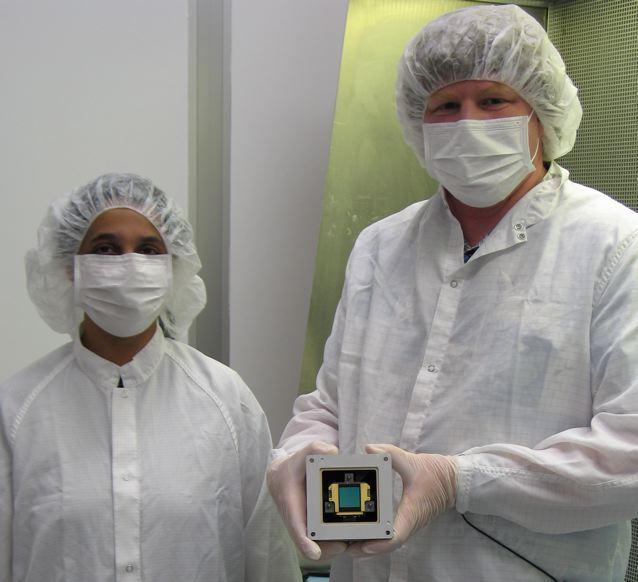
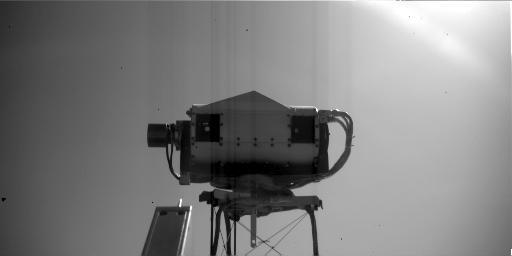
This room does not begin with a test tube, but with a mirror. Eighteen golden hexagons of the James Webb telescope, seen through the glass of a clean room, form a honeycomb that is also a face: an instrument built to gather light our eyes cannot register. Nearby, the testing of MIRI, an infrared instrument, lowers that monument to human scale — white coats, caps, masks and gloves. Before any cosmic spectacle, the marvellous here is procedural: wipe, align, rehearse, repeat. The second movement looks at the laboratory as a maker of controlled fictions. A scale model of the Atlas V and Starliner is held in two hands for a wind-tunnel test; the Stereo Surface Imager for Mars faces the camera in black and white like a portrait of the observer itself. These objects are not yet discoveries. They are promises and rehearsals, devices that let researchers practise on something small, substitute or remote before trusting what arrives from far away. Then the room turns, and the trick becomes image. A coronagraph hides the Sun behind an opaque disk so that a sungrazing comet and a solar eruption can appear in red and orange. Spitzer uses a black mask to conceal a bright nucleus and reveal the coma of the comet Don Quixote. Jupiter's ultraviolet aurora floats as a blue oval; Saturn is first cut into parallel bands of ice, then opened from above as a red polar vortex ringed by aurora. Europa offers no colour at all, only fractured grey ice. In each case, abstraction is not decoration added to science. It is what measurement looks like when wavelength, mask, tilt and false colour are allowed to speak. The ending widens the scale without abandoning that lesson. NGC 55 stretches diagonally in ultraviolet, mottled with young stars, and the Helix Nebula closes the route as an infrared eye — red centre, turquoise ring — staring back at us. The visitor leaves having travelled from gloved hands to a nebula by way of mirrors, masks and models. The laboratory is marvellous not because it disguises science as art, but because its most exact instruments keep producing images that exceed their use.
Esta sala no empieza con una probeta, sino con un espejo. Dieciocho hexágonos dorados del telescopio James Webb, vistos tras el cristal de una sala limpia, forman un panal que también es un rostro: un instrumento construido para reunir una luz que nuestros ojos no registran. Cerca, las pruebas del MIRI, un instrumento infrarrojo, bajan ese monumento a escala humana: batas blancas, cofias, cubrebocas y guantes. Antes de cualquier espectáculo cósmico, aquí lo maravilloso es procedimiento: limpiar, alinear, ensayar, repetir. El segundo movimiento mira el laboratorio como fábrica de ficciones controladas. Un modelo a escala del Atlas V con la Starliner se sostiene entre las manos para un ensayo en túnel de viento; el Imager Estéreo de Superficie para Marte mira de frente a la cámara, en blanco y negro, como un retrato del propio observador. Estos objetos todavía no son descubrimientos. Son promesas y ensayos, dispositivos que permiten practicar con algo pequeño, sustituto o remoto antes de confiar en lo que llegará de lejos. Después la sala gira y el truco se vuelve imagen. Un coronógrafo oculta el Sol detrás de un disco opaco para que aparezcan, en rojo y naranja, un cometa rasante y una erupción solar. Spitzer usa una máscara negra para tapar un núcleo brillante y revelar la coma del cometa Don Quijote. La aurora ultravioleta de Júpiter flota como un óvalo azul; Saturno primero se corta en franjas paralelas de hielo y luego se abre, desde arriba, como un vórtice polar rojo rodeado por una aurora. Europa no ofrece color, solo hielo gris fracturado. En cada caso, la abstracción no es decoración añadida a la ciencia. Es el aspecto de la medición cuando se deja hablar a la longitud de onda, la máscara, la inclinación y el falso color. El cierre amplía la escala sin abandonar esa lección. NGC 55 se estira en diagonal en ultravioleta, moteada de estrellas jóvenes, y la Nebulosa de la Hélice termina el recorrido como un ojo infrarrojo —centro rojo, anillo turquesa— que nos devuelve la mirada. El visitante sale habiendo viajado de unas manos con guantes a una nebulosa pasando por espejos, máscaras y modelos. El laboratorio es maravilloso no porque disfrace la ciencia de arte, sino porque sus instrumentos más exactos no dejan de producir imágenes que exceden su uso.
The routeEl recorrido

The Golden Face of Webb Behind the Cleanroom GlassEl rostro dorado del Webb frente al cristal del laboratorio
GSFC · 2017-12-08
The room opens with an instrument that looks back at us: the James Webb primary mirror, eighteen golden hexagons seen through laboratory glass, with the secondary mirror held by three black arms. It is both machine and face, a honeycomb built to collect light we cannot see. Start here because everything after it depends on a surface prepared in a clean room.
La sala abre con un instrumento que nos mira: el espejo primario del James Webb, dieciocho hexágonos dorados vistos a través del cristal del laboratorio, con el espejo secundario sostenido por tres brazos negros. Es máquina y rostro a la vez, un panal construido para reunir luz que no vemos. Empieza aquí porque todo lo demás depende de una superficie preparada en sala limpia.
Testing MIRI: The Infrared Heart of the James Webb TelescopePruebas del MIRI: el corazón infrarrojo del telescopio James Webb
NASA/JPL-Caltech · 2008-09-24
From the golden surface we move to the people who test the infrared instrument MIRI, two figures in white coats, caps, masks and gloves inside a clean room. The scale drops from monumental to bodily, answering the previous image: the mirror does not work alone. Wonder here is procedural, gloved and deliberately unglamorous.
De la superficie dorada pasamos a quienes prueban el instrumento infrarrojo MIRI, dos figuras con batas blancas, cofias, cubrebocas y guantes dentro de un cuarto limpio. La escala baja de lo monumental a lo corporal y responde a la imagen anterior: el espejo no trabaja solo. Aquí lo maravilloso es procedimiento, guantes y una falta deliberada de glamour.

Wind Tunnel Test of Atlas V with Starliner Capsule, NASA Ames CenterEnsayo en túnel de viento del Atlas V con la cápsula Starliner, Centro Ames de la NASA
NASA AMES · 2016-10-13
A man holds a scale model of the Atlas V with the Starliner capsule for a wind-tunnel test, concentrating on an object small enough for his hands. After the clean room, this is the laboratory as rehearsal: fly first in miniature, measure, repeat. Its yellow joint and horizontal support make engineering read like a carefully balanced sculpture.
Un hombre sostiene un modelo a escala del Atlas V con la cápsula Starliner para un ensayo en túnel de viento, concentrado en un objeto que cabe en sus manos. Después del cuarto limpio, este es el laboratorio como ensayo: volar primero en miniatura, medir, repetir. Su unión amarilla y el soporte horizontal hacen que la ingeniería se lea como una escultura en equilibrio.
Surface Stereo Imager on Mars, Face-OnImager Estéreo de Superficie en Marte, de frente
NASA/JPL-Caltech/University of Arizona/Max Planck Institute · 2008-10-03
The Stereo Surface Imager for Mars appears front-on in black and white, backlit, wrapped-looking, with one cylindrical camera eye to the left. Unlike the hand-held model before it, this instrument is photographed as a portrait of the observer itself. Before the images it sends, we look at the thing that will look.
El Imager Estéreo de Superficie para Marte aparece de frente en blanco y negro, a contraluz, con aspecto envuelto y un ojo cilíndrico de cámara a la izquierda. A diferencia del modelo sostenido antes, este instrumento se fotografía como retrato del propio observador. Antes de las imágenes que enviará, miramos el aparato que mirará.

Sungrazing Comet Plunging Toward the Sun, March 12, 2010Cometa suicida hacia el Sol, 12 de marzo de 2010
GSFC · 2017-12-08
Now the laboratory trick becomes visible: an opaque disk hides the Sun so a coronagraph can reveal a sungrazing comet and an eruption fanning out in red, orange and white. A thin white ring marks the Sun's real size inside the black-red field. After looking at instruments, we see that discovery may require blocking the brightest thing in frame.
Ahora se ve el truco de laboratorio: un disco opaco oculta el Sol para que un coronógrafo revele un cometa rasante y una erupción que se abre en abanico rojo, naranja y blanco. Un delgado anillo blanco marca el tamaño real del Sol dentro del campo rojo y negro. Tras mirar instrumentos, entendemos que descubrir puede exigir bloquear lo más brillante del encuadre.

Spitzer Spies the Coma and Tail of Comet Don QuixoteSpitzer descubre la coma y la cola del cometa Don Quijote
NASA/JPL-Caltech/DLR/NAU · 2013-09-10
Spitzer repeats the gesture with a black circular mask at the centre, hiding a bright nucleus so the comet Don Quixote's coma can glow from near-white yellow into orange and dark red. Placed after the solar image, the rhyme is exact: two artificial eclipses, two halos made legible by a hole. The centre of the picture is what we are not allowed to see directly.
Spitzer repite el gesto con una máscara circular negra al centro, que oculta un núcleo brillante para que la coma del cometa Don Quijote brille del amarillo casi blanco al naranja y el rojo oscuro. Después de la imagen solar, la rima es exacta: dos eclipses artificiales, dos halos legibles gracias a un hueco. El centro de la imagen es lo que no se nos permite ver directamente.

Satellite Footprints in Jupiter's AuroraHuellas de satélites en la aurora de Júpiter
NASA and the Hubble Heritage Team STScI/AURA Acknowledgment: NASA/ESA, John Clarke University of Michigan · 2001-07-21
Hubble's ultraviolet view of Jupiter's aurora turns that hidden-centre device into a luminous blue-cyan oval floating on almost empty black. The oval is irregular, brighter at one edge and misty at the other, with satellite footprints implied by its labels and tags. Invisible light becomes jewellery, but it is still a measurement of a magnetosphere.
La vista ultravioleta de Hubble de la aurora de Júpiter convierte aquel recurso del centro oculto en un óvalo luminoso azul y cyan que flota sobre un negro casi vacío. El óvalo es irregular, más brillante en un borde y brumoso en el otro, con huellas de satélites señaladas en sus etiquetas. La luz invisible se vuelve joya, pero sigue siendo una medición de una magnetosfera.
Saturn Ring RegionRegión de los anillos de Saturno
NASA/JPL · 1999-04-28
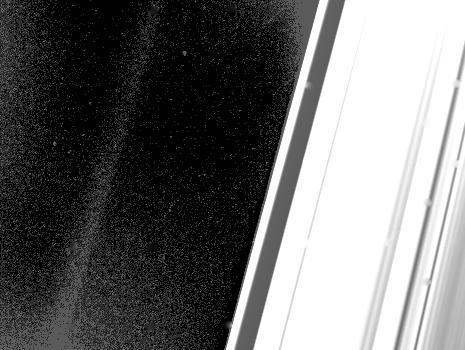
Saturn's rings cut the black field with a hard diagonal: granular darkness on one side, parallel bands of dazzling white and pearl grey on the other. After Jupiter's soft oval, geometry takes over and abstraction stops being a metaphor. These are countless particles organised by gravity into something close to a vinyl groove or a barcode of ice.
Los anillos de Saturno cortan el campo negro con una diagonal dura: oscuridad granulada de un lado, franjas paralelas de blanco deslumbrante y gris perla del otro. Después del óvalo suave de Júpiter, manda la geometría y la abstracción deja de ser metáfora. Son partículas incontables organizadas por la gravedad en algo cercano a un surco de vinilo o un código de barras de hielo.

Saturn's Polar Aurora: The Blue Ring Over the Red VortexAurora polar de Saturno: el anillo azul sobre el vórtice rojo
NASA/JPL/University of Arizona · 2008-11-12
Seen from above in infrared false colour, Saturn's pole answers the straight ring bands with a red spiral vortex ringed by blue aurora. The previous image was linear and monochrome in feeling; this one is centrifugal, stained and almost biological. Together they show the same planet as both ruled diagram and stormy organism.
Visto desde arriba en infrarrojo y falso color, el polo de Saturno responde a las franjas rectas de los anillos con un vórtice espiral rojo rodeado por una aurora azul. La imagen anterior era lineal y casi monocroma; esta es centrífuga, manchada y casi biológica. Juntas muestran al mismo planeta como diagrama reglado y como organismo tormentoso.
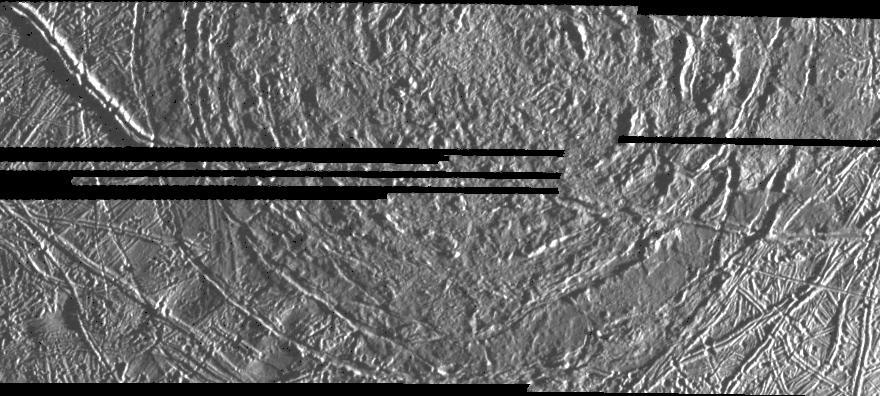
Macula on Europa, Moon of JupiterMácula en Europa, luna de Júpiter
NASA/JPL · 1998-03-06
Europa cools the room down: a long greyscale mosaic of fractured ice, criss-cross ridges, grooves and a faint circular arc from a degraded macula. After Saturn's saturated vortex, texture replaces colour and the surface reads like cracked ceramic, skin or an etching plate. The surprise is that the most abstract wall here may be a moon's crust.
Europa enfría la sala: un largo mosaico en escala de grises de hielo fracturado, crestas entrecruzadas, surcos y un tenue arco circular de una mácula degradada. Después del vórtice saturado de Saturno, la textura sustituye al color y la superficie se lee como cerámica agrietada, piel o plancha de grabado. La sorpresa es que el muro más abstracto puede ser la corteza de una luna.

Galaxy NGC 55 in Ultraviolet LightGalaxia NGC 55 vista en luz ultravioleta
NASA/JPL/California Institute of Technology · 2003-12-10
The galaxy NGC 55, seen in ultraviolet and nearly edge-on, stretches diagonally like a luminous splinter or cigar against velvet black. Its mottled disk and bluish sparks mark young star clusters, extending the previous fractured line into deep space. We leave planetary surfaces behind, but keep the same lesson: tilt, wavelength and exposure compose the object.
La galaxia NGC 55, vista en ultravioleta y casi de canto, se estira en diagonal como una astilla luminosa o un puro sobre negro aterciopelado. Su disco moteado y sus chispas azuladas señalan cúmulos de estrellas jóvenes, y prolongan la línea fracturada anterior hacia el espacio profundo. Dejamos las superficies planetarias, pero queda la misma lección: inclinación, longitud de onda y exposición componen el objeto.

Comets Kick Up Dust in the Helix NebulaCometas levantan polvo en la Nebulosa de la Hélice
NASA/JPL-Caltech/Univ.of Ariz. · 2007-02-12
The Helix Nebula closes the route in infrared as a giant eye: an intense red centre, a maroon cloud and an uneven turquoise, foamy ring around it. It returns us to the first golden mirror, another round instrument for seeing, now become the thing seen. The laboratory ends by looking back, and the visitor is the specimen under its gaze.
La Nebulosa de la Hélice cierra el recorrido en infrarrojo como un ojo gigante: un centro rojo intenso, una nube granate y un anillo turquesa desigual y espumoso alrededor. Nos devuelve al primer espejo dorado, otro instrumento redondo para ver, ahora convertido en objeto visto. El laboratorio termina mirándonos, y el visitante es la muestra bajo su mirada.
Before you leaveAntes de irte
When a telescope blocks the brightest part of what it looks at, is what remains a truer image or a more beautiful one?
Cuando un telescopio bloquea lo más brillante de lo que mira, ¿lo que queda es una imagen más verdadera o una más bella?